The Bones of Who We Are: Gratitude

It has been a week since The Bones of Who We Are released. A gorgeous week filled with support for Gabe and his story. I am so very grateful. I remember when I got to that point I was ready to share the story, how terrifying it was because I knew I’d taken a risk with his story, but with the wonderful and supportive feedback, I am so ecstatic.
John Green said in a Crash Course about Literature that when an author lets go of the story and gives it over to the audience, it ceases being the author’s story and becomes the readers’. I love this. So, I’d like to share some of the impressions Gabe’s story in THE BONES OF WHO WE ARE has provided to readers.

“... the words were magic, each line so delicately put like a song you wanted to continue singing... the author sends you spiraling inside [Gabe’s] brain and his story ... and each step of the way, you become [his] cheerleader...”
“...it is rare to find a novel, a character that resembles oneself - at least for me - it was as if I was looking into a mirror... CL Walters talent for capturing, conjuring the essence of her characters is remarkable... [She] is a talent that you do not want to miss.”
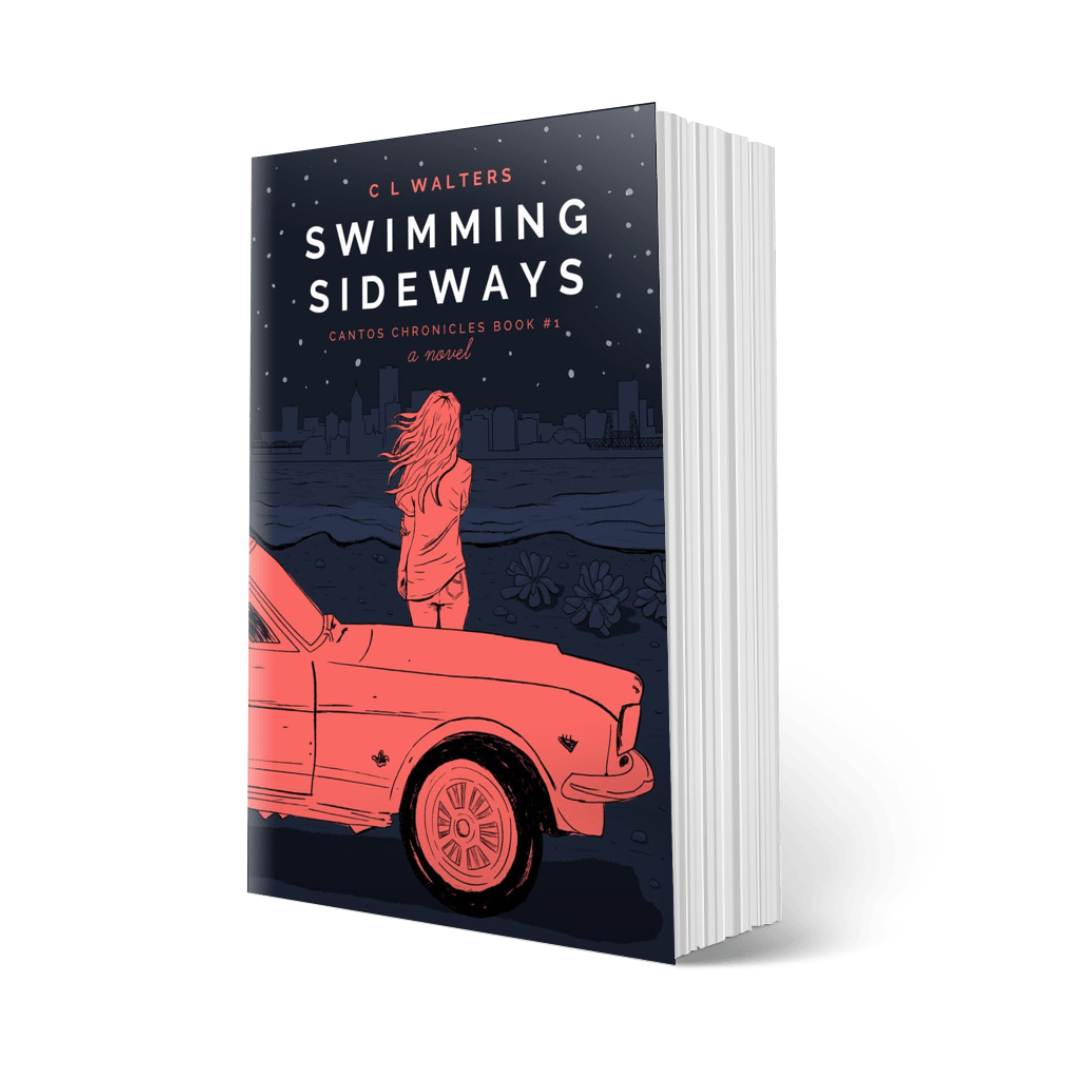
“I became a fast fan of CL Walters after reading Swimming Sideways and The Ugly Truth. The Bones of Who We Are is a brilliant conclusion to the Cantos Chronicles YA Book Series.””
“Have to warn you, have tissues next to you while you read. You’ll need them.”
“The aspect that makes these books so good is that the themes, conflicts, and internal battles are deeply relatable...”
“Walters tackles heavy, important issues like Mental health and Racism with grace and tact - with a responsibility to the story without losing her voice. Beautifully paced, she drew me in but kept me guessing as the story moved to a breathless conclusion... This is a story everyone needs to read.”
Thank you so much to all of the readers who have read Gabe’s story. I am so deeply humbled and grateful for your willingness to take a chance on Swimming Sideways, The Ugly Truth and now, The Bones of Who We Are. Please continue to share your experience with me, with others. I believe in these stories, and it is so wonderful that you do too.

Available here
The Bones of Who We Are: A Difficult Story

My father - my rock - passed away in October 2017. I miss him everyday. I didn’t think I would ever find the words to write again. When I tried, all that made it to the page were visceral and painful images of where I was stuck: my cave. About six months later, I was sitting at a traffic light and heard Abby say “I need you to write my story.” The pilot light was relit, and I found my way through a new draft of SWIMMING SIDEWAYS.
The summer of 2018, with SWIMMING SIDEWAYS and THE UGLY TRUTH drafted, I went home to Oregon for a month to help my mom and sister go through my father’s things. Most of the month was spent broken-hearted, trudging through necessary spaces. I cleaned the garage breathing in my father’s work space and going through each of his tools. This was something my mother wasn’t going to be able to do. My dad and his workshop were symbiotic; he could fix anything, and his workshop reflected this. So, immersion in his workshop, going through each of his toolboxes and trinkets, the jars of things he saved because they’d come in handy one day, cracked me open. Somehow, in the breaking of my heart and the diligent reorganization of his things, I was able to assemble the broken parts of myself back together. It was during this four weeks in Oregon that I began drafting Gabe’s story, and as I stitched myself back together, Gabe’s began to unravel.
I’ve warned readers that Gabe’s story isn’t an easy story to experience, and that is because THE BONES OF WHO WE ARE deals with heavy topics: bullying, depression, identity, loss, grief. Maybe in a way, the loss of my father is reflected in the pain of Gabe. My pain became his, though Gabe’s story was always this, I just couldn’t write it before. The pivotal scene in the book - the reason Gabe is who he is - was written back in 2009, eight years before I lost my father; nine years before I went through his workshop and faced my own undoing.
Perhaps, I was never going to be equipped to tell Gabe’s story without understanding the complete loss of someone so essential to my own identity. Perhaps, sitting inside my father’s workshop by myself allowed me to grasp loss, life, and grief in a way I never would have without that struggle. As writers our life experiences impact the depth of our knowledge. Virginia Woolf wrote, “Every secret of a writer’s soul, every experience of his life, every quality of his mind is written large in his works.” So, I suppose by realizing how painful it was to look at my father’s empty steel-toed work boots and be slammed with the awareness of how much I missed him, it forced me to jump into the deep end of loss. When the only thing I could do was climb into bed and bury myself in romance novels because those stories were as much as I could handle to not sink and drown, I found a way to tread water. Perhaps, this trial was the only way I was ever going to be able to empathize with Gabe’s experience.
THE BONES OF WHO WE ARE isn’t an easy story, but then life, love, loss, grief never are. That is the truth of what it means to be human. We hurt, but there is power in the warmth of hope. That - the hope - is what my father would have loved about Gabe’s story.

NEXT WEEK: A Letter from Gabe to readers
The Bones of Who We Are: Journey to Gabe

When Gabe became a character in my mind, he started as a fallen angel. There was something magical and beautiful about him in those first drafts of the original paranormal story. He was the blameless sacrifice - the Christ figure - idealized in all his beauty and glory. Then in 2009, I was teaching a class on creativity and in our daily pages, I wrote a heartbreaking scene that I couldn’t shake. I knew without a shadow of a doubt that the character was Gabe as a child, and it shattered the paranormal drafts of the work-in-progress at the time. Nothing already drafted could stand if I used the scene. What the heck was I supposed to do with that, I wondered.
So the scene sat in my head as an unresolved issue with Gabe’s character. I put the manuscript - two years and nine drafts completed - away (partially because of this unresolved issue, but mostly because a wave of fallen angel stories broke in 2009 and 2010).
In 2015, Seth - the loudest of the three characters - who’d been dragged into hell at the end of the first paranormal story, began nagging me about having left him there. I pulled the story out again. I was teaching Homer’s Odyssey and the Hero’s Journey to my freshman at the time, and decided to plot Seth’s story using Chris Volgler’s work, and suddenly something clicked. The story was there, but I believed it to be a stand alone novel assuming Abby and Gabe were just secondary characters. So, I finished THE UGLY TRUTH in 2016; I was never happy with its ending. My family and friends enjoyed it (or pretended to), but I couldn’t get the nagging feeling out of my head and heart that the ending was all wrong.
So, it sat for another two years.
Then in March of 2018, I was sitting at a traffic light, waiting, and I heard Abby say in my head, “I need you to finish my story.” In that moment, it dawned on me that all three of them needed their own story. Abby. Seth. Gabe. With Seth’s already done, I went back to the original paranormal manuscript to see if there was anything salvageable for Abby and Gabe. With a ton of cutting, rewriting, and creating new content, Abby’s story, SWIMMING SIDEWAYS, came together, but like Seth’s narrative, I struggled with the ending. I couldn’t figure out how it was supposed to connect until it dawned on me: Abby’s story was first and both she and Seth’s stories were necessary in order to tell Gabe’s. Like finding the last pieces of a puzzle being put into place, I understood the whole story in three parts. The entire series had been moving toward the culmination of Gabe’s narrative all along.
That quiet, painful scene I wrote back in 2009, suddenly made sense, and served as the cornerstone around which Gabe’s entire story is built.
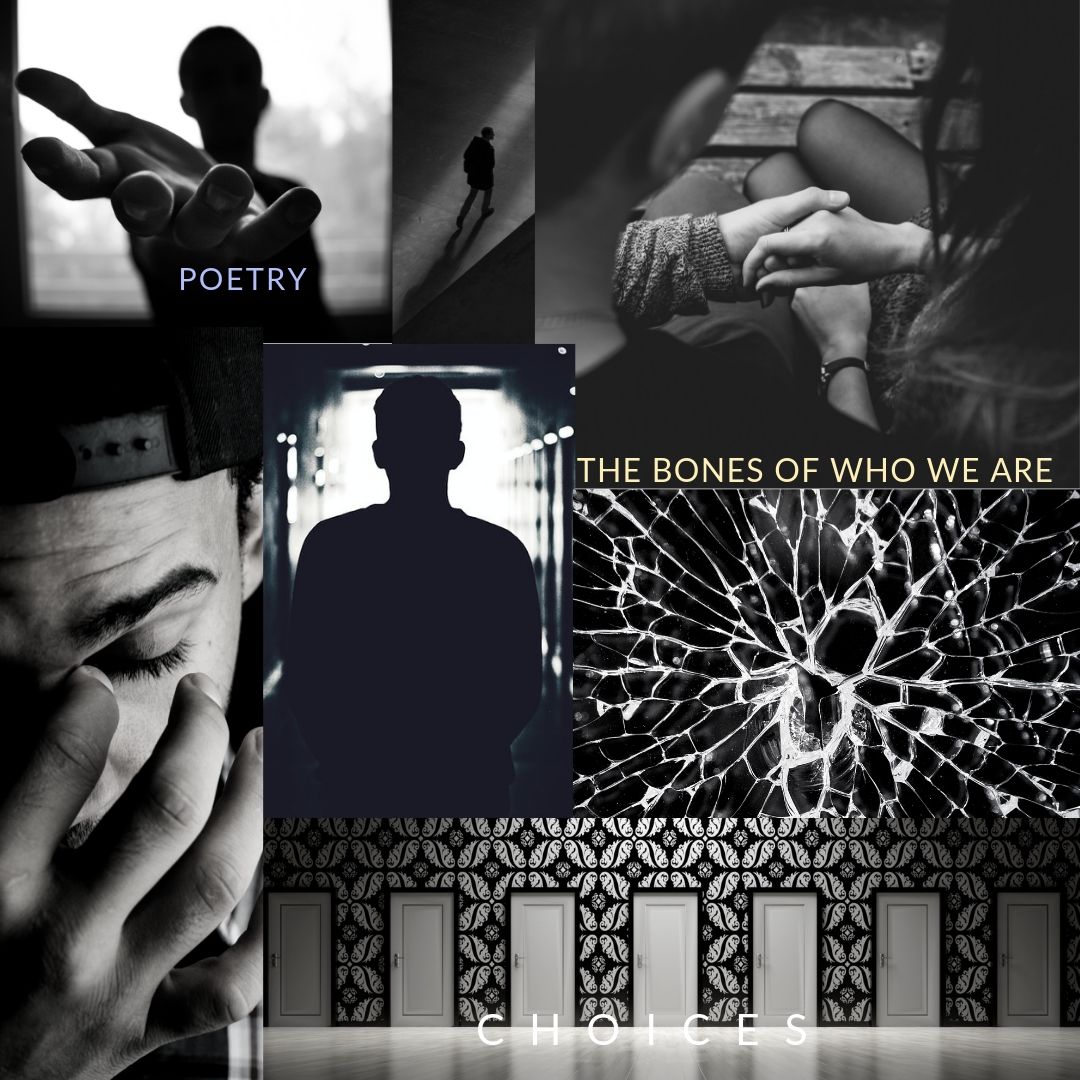
The aesthetic I made for Gabe’s story.
Next week: the difficulty of writing Gabe’s story .
Book Mash-Up Fun
You know how on Glee, they would mash-up songs to create a new song. Well, I was thinking about my books and wondered if they were a mash-up of books, what would their mash-up be?
Here are my book mash ups . . .
Swimming Sideways would be:

Have you read any of these books?
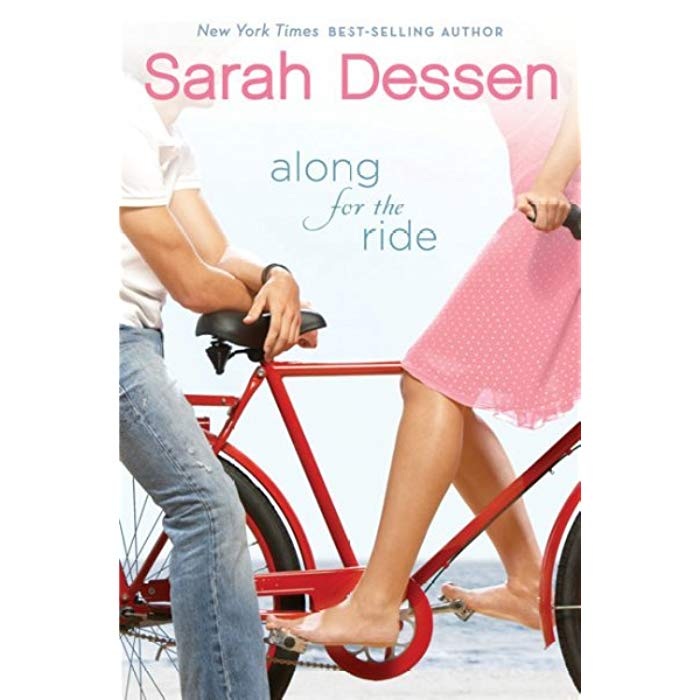
The first is Sarah Dessen’s Along for the Ride (2009). It’s about a girl who’s struggling with perfectionism and the divorce of her parents. A good read for anyone interested . . .And Dessen is coming out with a new book this year, I think.
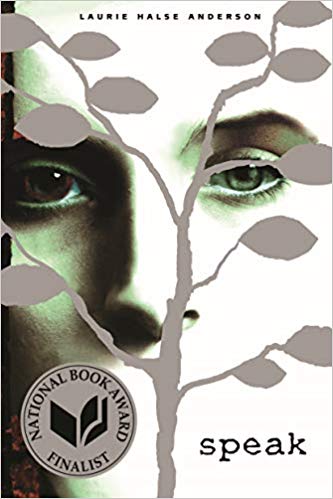
The second is Speak by Laurie Halse Anderson. This book is about Melinda who starts her freshman year an outcast because of calling the cops at the end of summer party. There’s more than meets the eye, however. THIS is one of my FAVORITE YA novels of all time. And Laurie Halse Andrerson just published a book TODAY called SHOUT.
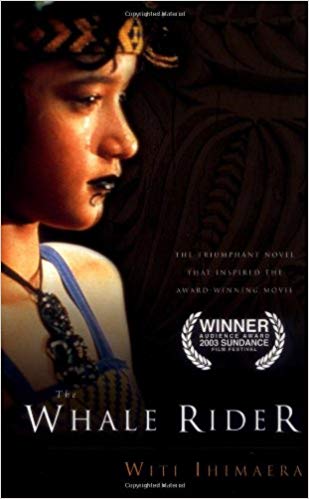
Whalerider by Witi Ihimaera is a beautiful story that explores a Maori girl facing the struggle between the patriarchal stance of the old world tradition her grandfather holds and the ushering in of a new era of cultural strength with the beauty of the youth. It is so beautifully written and grapples with themes of culture, gender and identity.
John Green’s Looking for Alaska (which is being adapted into a Hulu show) is a book that explores not only personal identity but what it truly means to live which I also explored recently on my IG for my review on Five Feet Apart.
The Ugly Truth would be
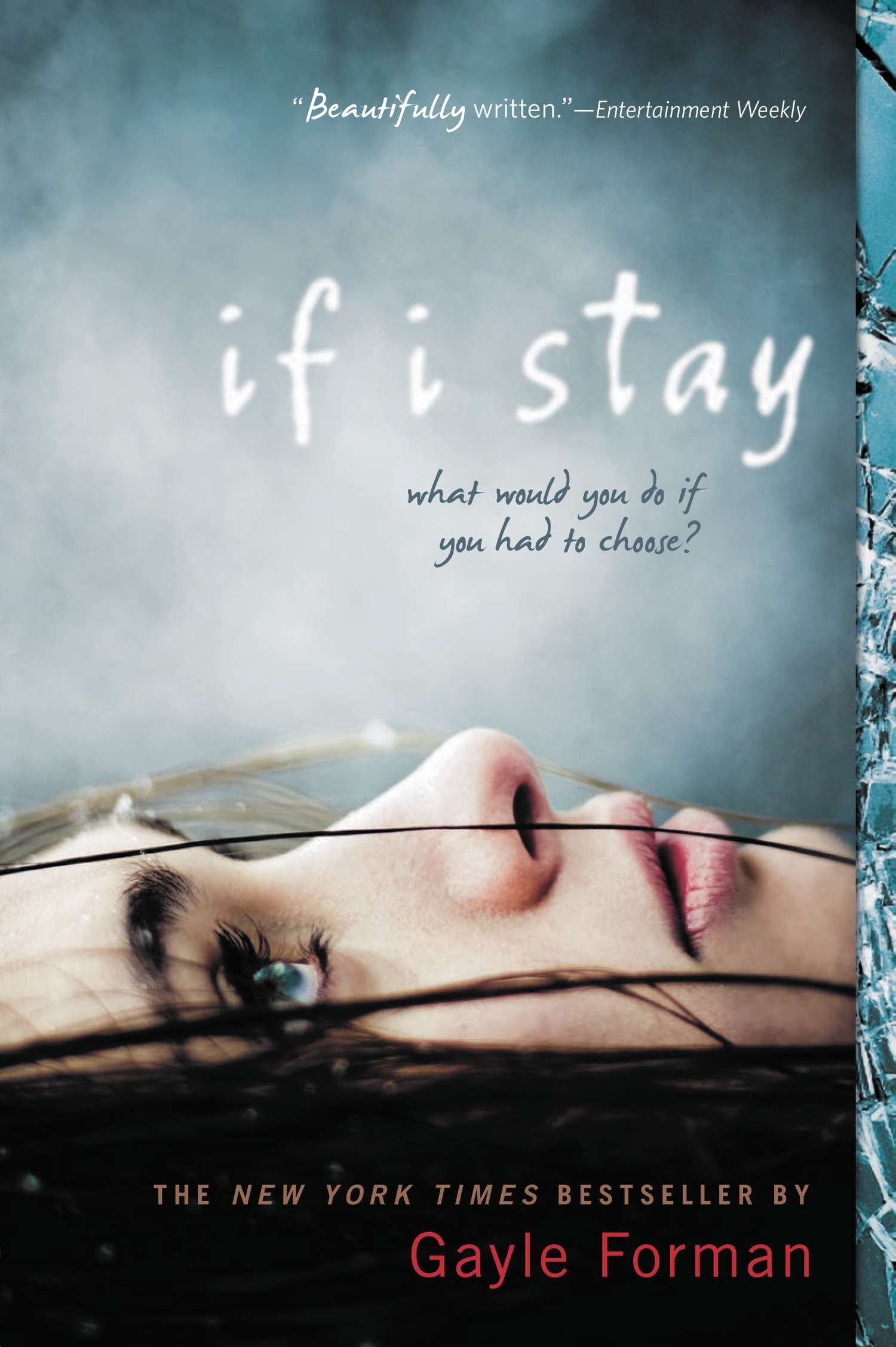

Gayle Foreman’s If I Stay forces a young woman caught in between life and death to examine her reasons for living as she determines if she should live or not after a fatal car accident carrying her and her family through the Oregon countryside.
The Lovely Bones of Alice Sebold is the unflinching revelation of a teen girl’s murder, and its aftermath on the family left behind told through the lenses of the murdered girl.
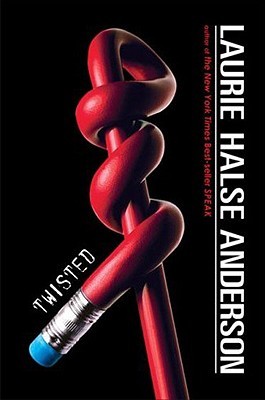
It might be a bit obvious that I am an admirer of Laurie Halse Anderson’s work. Twisted is her novel about a young man struggling not only with his own identity as a young man, but with his father ideas (and struggles) related to manhood.
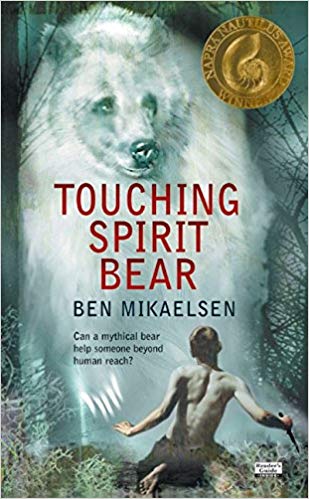
Touching Spirit Bear by Ben Mikaelson is the story of a young man named Cole who’s dealing with a lot of anger. After perpetrating a horrific crime against another young man - nearly killing him - Cole is offered the opportunity to face his punishment through Native American Circle Justice. What he doesn’t realize, however when he accepts this challenge instead of prison, is just how much it will change him.
What do you think? What would your mash-up for Swimming Sideways and/or The Ugly Truth be? Comment below.
Snappy Dialogue in 3 Minutes
Instead of Swimming Sideways, I choose some dialogue from The Ugly Truth:
In this scene, a contrite Seth tries to apologize to an angry and bitter Gabe:
“What is this?” Gabe asks. He looks around me as though looking for something specific. “I kind of thought maybe it was a trap. Thought you might bring a mob here to take me out.”
I stop several feet from him. “Yeah. That sounds my style.”
“Especially with a girl involved.” His words feel like acid burning holes through my confidence. I have no witty rejoinder, no quick comeback to deflect his anger. His mention of what caused the Freak Challenge and now Abby sets me on edge.
I hold my hands up. “Just me.”
“That must have been a pretty nasty reconstruction of your face,” he says.
“Soccer,” I lie.
“Still hitting you then?” Gabe says. He stuff his hands into his pockets. “And you’re still lying about it.”
“Look. I told you that in confidence,” I say.
“Yeah. Like I told you my history in confidence.”
I look down at my feet and then away from him. He’s right. I used his history against him to start the Freak Challenge. I ignore the jab. “So why did you go to Mr. Robinson?”
“Wasn’t my idea,” he says confirming my suspicion. “For some reason, you had the concern of a rather nice girl who was sincerely worried about you. I don’t know what the hell for.” His tone is bored. He pushes some loose asphalt near his foot with the toe of his shoe. I notice differences from the last time we’d spoken. He’s taller, more muscular. His hair is darker and longer. It’s curly now that it’s grown out. He stares at me with those icy eyes that are always so disconcerting.
He said had the concern not have. This is a knife in my chest.
“She shouldn’t have done that,” I say.
“She seemed to think that the beatings were getting worse.”
I look out at the fence that runs the perimeter of the school. I don’t feel like talking to him. “Doesn’t matter.”
“Doesn’t it?”
“Don’t,” I say and clench my jaw. Anger is a sprite igniting fires inside me. I don’t want his concern even if it isn’t direct. I don’t deserve it.
“Don’t what? Ask? Give me a break. I think I’m being pretty polite given the circumstances.”
“Yeah. Yeah. Whatever. No love lost. I get it.”
He pushes away from the car. I’ve pushed his button. “Do you, Seth?”
I’m not prepared to fight him, wouldn’t be able to with all of the injuries I’ve sustained. I change the subject.“I just came to ask you not to go sharing my information with anyone,” I finally say. “I don’t need my dad catching wind of it. I got a little over a year left and then I’m out. I need out.”
He mocks me with a laugh and a smirk.
I take a deep breath. “I know it doesn’t mean much, but I’m sorry. Sorry for what I did.”

Click here to see on Amazon
Pacing the Narrative: A New Tool
Look up “pacing your novel” on the internet, and you’ll hit a list of links page after page. It’s a topic about which writers are curious and hopeful of answers. The conundrum is, however, there isn’t a quick and true “fix” to pace. A range of techniques from developing conflict and tension to literary devices like dialogue, imagery, and syntax (personal usage of language) are presented as means to achieve the elixir for pace. There’s a plethora of information out there.

Every writer has a toolbox built over the years of developing craft. Again, Stephen King talks about this extensively.
So, instead of write about pacing from the same lens of what’s already been offered, I thought I’d draw from my writer’s toolbox and cover a technique I learned and have used directly related to pacing.
First and foremost, as Stephen King has impressed upon us in his On Writing: a Memoir of the Craft, read, read and read some more. There is no better way to become a better writer (other than to write). Studying authors you like, different genres, “listening” to the beats of writing with a writer’s ear is the first and best way to develop your own style which includes pacing. This is not an easy fix, just a necessary truth.
That said, here’s a tool from my own TOOLBOX: Compression and Expansion
Several years ago, I attended a workshop called Write Your Life by Mark W. Travis (Hollywood Director; see his books about directing, writing, and writing structure). The purpose of the workshop was to explore autobiographical storytelling, and while it was geared toward oral storytelling it supported the art of writing the story. Two terms Mr. Travis taught were the ideas of Compression and Expansion both of which I have found useful in the art of pacing.
Compression does exactly what it sounds like: compress or press together in the case of story time. Consider in a movie the idea of a montage (i.e., a training montage in an action film, or the makeover trope in a romance film) and the way the visuals are pieced together to showcase the passage of time. Compression does this in a written form, highlighting key moments to compress the passage of time into something small and powerful.
Expansion is the opposite. It takes a key moment and expands it, highlighting its importance for the character, conflict, and theme. Visually, in a film, this might be a slow motion moment or a flashback. Expansion as a technique of writing follows a similar pattern as compression, highlighting key words and ideas to expand the idea into something meaningful.

The ideas in practice using work I’ve written would look like the following excerpts from my novels Swimming Sideways and The Ugly Truth. First determine a scene which you feel would benefit from either technique and determine if you want to highlight the passage of time - compress it - or the importance of a moment - expand it.
Compression (from The Ugly Truth):
In the following scene, Seth, the protagonist, has become aware of himself and the fact his consciousness is outside of his physical body. The compression used in this scene was meant to compress an unknown amount of time for him because time has stopped making logical sense:
The wail of the siren.
Words: “Stay with us, Seth.”
The wail of a woman (I think she is my mother).
Bright lights.
Beeps and blips of equipment speaking.
Drip.
“Swelling.”
“Induced coma.”
Doctors.
Whir.
Now.
I don’t think it has been very long. If I use the emotion of the woman I think is my mother’s gusts of grief as a measure, this seems recent.
Expansion (from Swimming Sideways):
The following scene is the moment the audience learns what happens to Abby in her past as she attends a party with her friend, Seth. Though the moment explores a party she attended in her past and the subsequent trauma of it, instead of glossing over the idea in a few sentences or a paragraph to tell what happened, I expanded it to heighten the drama of the whole scene.
I close my eyes and slip backwards in time:
Have another drink.
Feeling loose.
Kanoa is staring at me.
Giddy with his attention.
Another drink. He brings it to me.
Laughter.
Kanoa is all-encompassing. I’ve seen him at school. He’s older.
He asks me to dance.
Pressed up against me, the dance is slow. I feel his body. The ache of want.
A kiss and my heart dances too.
Here, have another drink.
Drown the pain and grief of losing Poppa.
I return to the dance with Seth and shudder. He leans back, lifts my face to look at him. He’s smiling, until he realizes I’m crying. “What’s wrong?” he says.
I shake my head, unable to speak and bury my head against his chest as I return to the past:
Another dance. Another drink. I feel loose.
I feel dizzy. Where are my friends?
Here’s another drink. Kanoa. He’s there.
Have another. Drink up.
Where are my friends?
Inhibition dissipates like steam from a boiling pot.
Fast song.
Kanoa dancing with me.
“Dance for me,” he says.
People encircle us.
The crowd chants my name but they slip away as I move; a show for Kanoa.
Kanoa pulls at my shirt. I help him take it off.
His hands all over my now bare skin.
His undivided attention. His smile.
I dance. He helps me, his hands guiding my hips.
The crowd cheers.
I didn't know there were cameras.
A show for everyone.
It was too late.
Where are my friends?
In a viral moment, I became the resident slut of my high school.
Writing is about making choices to propel our goal as writers of telling the best story we can. My goals for using these techniques were to:
pace the content,
highlight the importance of the moment in the narrative,
add to and build tension, and
finally to continue developing characters.
Is it directly related to pacing? Maybe. Maybe not. You decide.
Practice Point: Choose a moment in your current WIP to expand or compress. Reread the section with the addition. What does it do for pacing and flow?
NEXT UP: Dialogue
Latest Posts




-
September 2023
- Sep 25, 2023 Tanner's Story: The Bro Code Crew Sep 25, 2023
- Sep 25, 2023 The Thanksgiving Scene: Griffin and Maxwell Sep 25, 2023
-
August 2023
- Aug 13, 2023 In the Echo of this Ghost Town: Facing Fear Aug 13, 2023
- Aug 13, 2023 In the Echo of this Ghost Town: Choices and Consequences Aug 13, 2023
- Aug 13, 2023 A Letter from Maxwell (When the Echo Answers) Aug 13, 2023
- Aug 13, 2023 A Letter from Griffin (In the Echo of this Ghost Town Aug 13, 2023
- Aug 13, 2023 In the Wait: Matt Aug 13, 2023
- Aug 13, 2023 In the Wait: Jack Aug 13, 2023
- Aug 13, 2023 In the Wait: Carter Aug 13, 2023
- Aug 13, 2023 In the Wait: Sara Aug 13, 2023
- Aug 13, 2023 In the Wait: Gabe Aug 13, 2023
- Aug 13, 2023 In the Wait: Abby Aug 13, 2023
- Aug 13, 2023 A Letter from Gabe (The Bones of Who We Are) Aug 13, 2023
- Aug 13, 2023 A Letter from Seth (The Ugly Truth) Aug 13, 2023
- Aug 13, 2023 A Letter from Abby (Swimming Sideways) Aug 13, 2023